

Writer Daphne Palasi Andreades published her debut novel, Brown Girls, in 2022. In this work, she explores themes of coming-of-age and identity formation for women of color in the United States. Drawing from her own experiences, Andreades vividly and accurately describes the journey immigrants undergo as they adapt to a new culture, language, religion, and values. Learn more about this Queens native and her work on queenska.com.
Early Years
Daphne Palasi Andreades was born and raised in Queens. In her childhood, she mainly befriended children of color, including Chinese, Dominican, Bangladeshi, Panamanian, and Haitian kids. As a non-White person herself, Daphne quickly observed how colonialism and imperialism affected immigrant families. She and her friends constantly had to navigate gender and cultural stereotypes and meet the expectations of their families, which often conflicted with Western culture. They felt a deep connection to their heritage but also strove to succeed in American society. As people of color in America, Andreades and her friends faced various forms of sexism, prejudice, and marginalization.
Daphne studied creative writing at Columbia University, where she decided to depict strong characters in her work who use humor as a shield against sadness, alienation, pain, and especially anger. One of Andreades’ favorite authors is American writer Paul Beatty, who masterfully uses humor to explore racism in modern America. She also admires Anna Burns, a Northern Irish author whose historical psychological novel Milkman tells the story of an 18-year-old girl being pursued by an older, married man. Burns sharply critiques ingrained societal mindsets and exposes human hypocrisy.
First Book
On November 15, 2022, Random House published Andreades’ debut novel, Brown Girls. The story centers on a group of friends and their immigrant families from Queens. These young women of color grow up in one of the most diverse parts of the U.S., where the streets are alive with languages from around the world. They strive to blend their native cultures with American life. Young and vibrant, they fall for people who overlook them, only to later break hearts ruthlessly. They share unforgettable teenage nights, enjoy house parties, and fully experience their youth. However, as often happens in adult life, the friends eventually go their separate ways. Some stay in familiar neighborhoods, while others venture to new places. In the end, even after living apart, they find their way back to each other and to their native Queens.
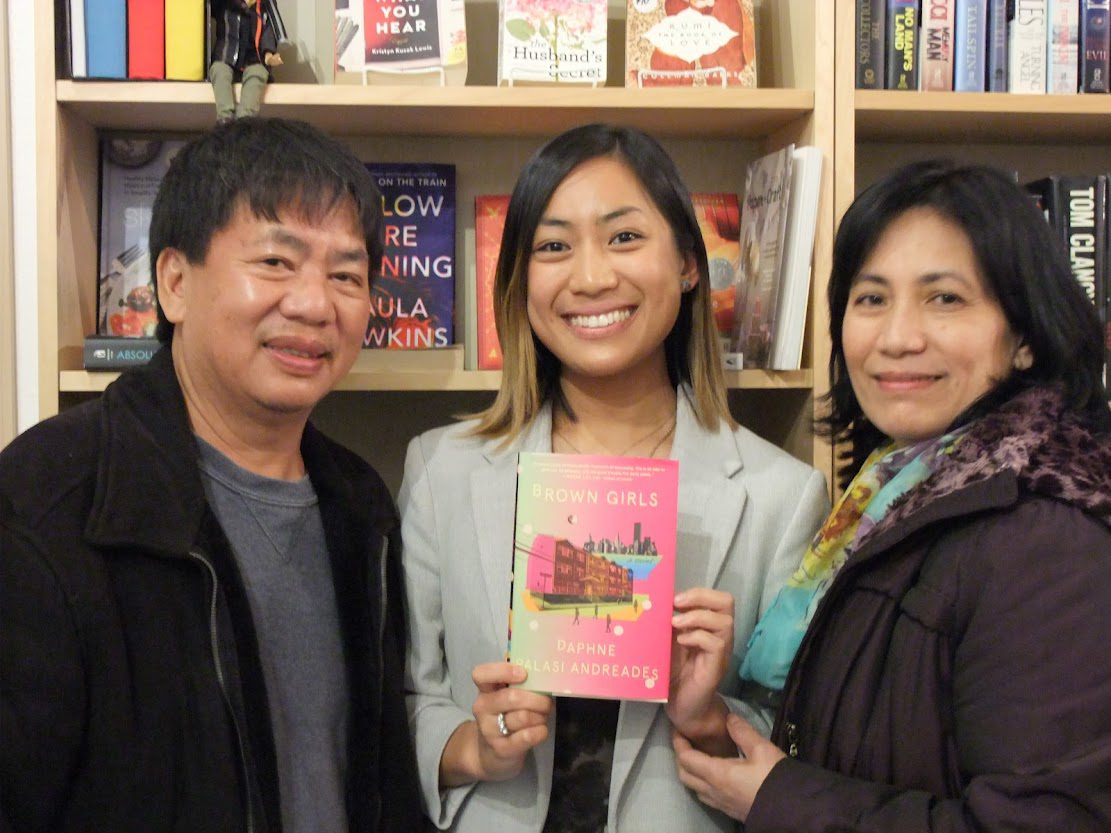
The novel paints a collective portrait of childhood, parent-child relationships, and explores issues of race, class, and marginalization in America. It’s a story about friends’ connections to each other, their families, and their communities, as well as women of color trying to find their place in the world. It’s especially interesting to observe how growing up as children of immigrants in Queens shapes their identities. In a sense, the book is an ode to coming of age, tracing the characters’ journey from childhood to adulthood. Yet, echoes of their past lives always accompany them, even when they are far from the place they grew up.
Brown Girls was selected as an Editor’s Choice by The New York Times and included in the Indie Next Pick list. It was also named one of the best books of the year by Popsugar and Kirkus. Many novels are set in New York City, but very few tell the stories of girls of color.