

Assata Shakur experienced the world’s injustices early on, facing discrimination due to her skin color. Growing up, she became a political and social activist, writer, and poet. A member of Black nationalist organizations, she dedicated her life to advocating for a better future for Black people. However, her biography also includes dark chapters. Read more about this influential figure, her controversial methods of seeking justice, and her journey from civil rights activist to an FBI-wanted criminal on queenska.com.
A Difficult Childhood
Joanne Deborah Byron (her birth name) was born on July 16, 1947, in Queens. When she was three, her parents divorced, and Assata moved with her grandparents to Wilmington, North Carolina. After finishing elementary school, she returned to Queens, where she lived with her mother, a teacher, and her stepfather. She frequently visited her grandparents due to the turbulent atmosphere at home, marked by her mother’s and stepfather’s financial struggles and constant arguments. Assata often ran away, lived with strangers, and supported herself through part-time jobs. This continued until her mother’s sister, civil rights lawyer Evelyn A. Williams, took her in on Manhattan.
Her aunt became a role model for Assata, introducing her to new ideas and taking her to museums, theaters, and art galleries. In her youth, Shakur converted to Catholicism and spent six months studying at Cathedral High School for Girls before transferring to a public school. She did not complete high school, but with her aunt’s help, she earned a GED by taking general education tests that confirmed her academic knowledge equivalent to a high school diploma. In school, Assata often faced criticism due to her dark skin. She recalls that teachers sometimes seemed surprised by her intelligence, as they did not expect Black students to be sharp and interested in learning.
Social Activism
After obtaining her GED, Shakur attended Borough of Manhattan Community College and later, City College of New York. She actively participated in political events, civil rights protests, and other causes. In 1967, she was arrested with 100 other Borough of Manhattan Community College students for trespassing. The students had chained the college building doors shut to protest the low number of Black faculty members and the lack of programs for Black students.
In 1970, after graduating from City College of New York, Assata fled to California following an unsuccessful marriage. There, she worked as a medical assistant and volunteered at Alcatraz during the Native American occupation, a protest against broken treaties and government exploitation. Shakur later joined the Black Panther Party, a leftist, African American socialist organization in the U.S. from 1966 to the early 1970s, which fought for Black rights. Assata actively helped organize protests and advocated for educational opportunities for Black people.
Upon returning to New York, she led the Harlem branch of the Black Panther Party, focusing on free breakfasts for children, free clinics, and community outreach. However, she soon left the organization, believing that its members lacked sufficient knowledge about Black history. Later, Shakur joined the Black Liberation Army, an underground militant group in the U.S. active from 1970 to 1981, aiming to “take up arms for the liberation and self-determination of Black people in the United States.” The organization was involved in a series of bombings, police killings, targeting drug dealers and White people, robberies, and prison escapes. In 1971, the activist adopted the alias Assata Olugbala Shakur, as she felt her birth name was tied to slavery. Assata, a West African name, is derived from the word “Aisha,” meaning “she who struggles,” while Shakur translates from Arabic as “grateful.”
Independent Writer and Poet
In her works, Assata Shakur openly shares her beliefs, even when they clash with popular opinion. Notably, she often criticized the Black Panther Party for its members’ lack of awareness and sexism. Her autobiographical book, Assata: An Autobiography (1987), written in Cuba where she was granted political asylum, includes various pertinent insights, particularly about education. Shakur studied in a system where teachers presented only selective truths. For instance, teachers omitted that the North emancipated slaves for economic rather than moral reasons, creating a distorted view of reality. This tendency to present incomplete information continues into the 21st century. Shakur also emphasized the importance of connecting different disciplines, as understanding interrelationships promotes critical thinking.
Assata also described her treatment as a Black woman in prison. She complained of being denied basic medical care and having limited access to hygiene products. In New Jersey’s history, no woman had endured treatment comparable to Shakur’s. She was held in a men’s prison under constant surveillance, serving time in harsh and inhumane conditions. From a young age, she believed the world was too cruel to bring a Black child into it. According to Shakur, the future held only unhappiness, disappointment, and oppression for Black children. When she was pregnant, a prison doctor told her she needed an abortion because a miscarriage was inevitable. Both Shakur and her lawyer had to fight to ensure she received appropriate medical care so she could deliver a healthy baby.
Accusations and Imprisonment
Despite her accomplishments, Assata Shakur cannot be considered a role model. From 1971 to 1977, Shakur committed a series of audacious crimes, sometimes alongside other members of the Black Liberation Army, including two bank robberies in New York, kidnapping and killing a drug dealer, armed robbery, ambush attacks on police officers, and more. Of these trials, three ended in acquittals, one in a hung jury, one in a mistrial, one due to a change of venue, and one in a guilty verdict. Three other charges were dismissed without trial.
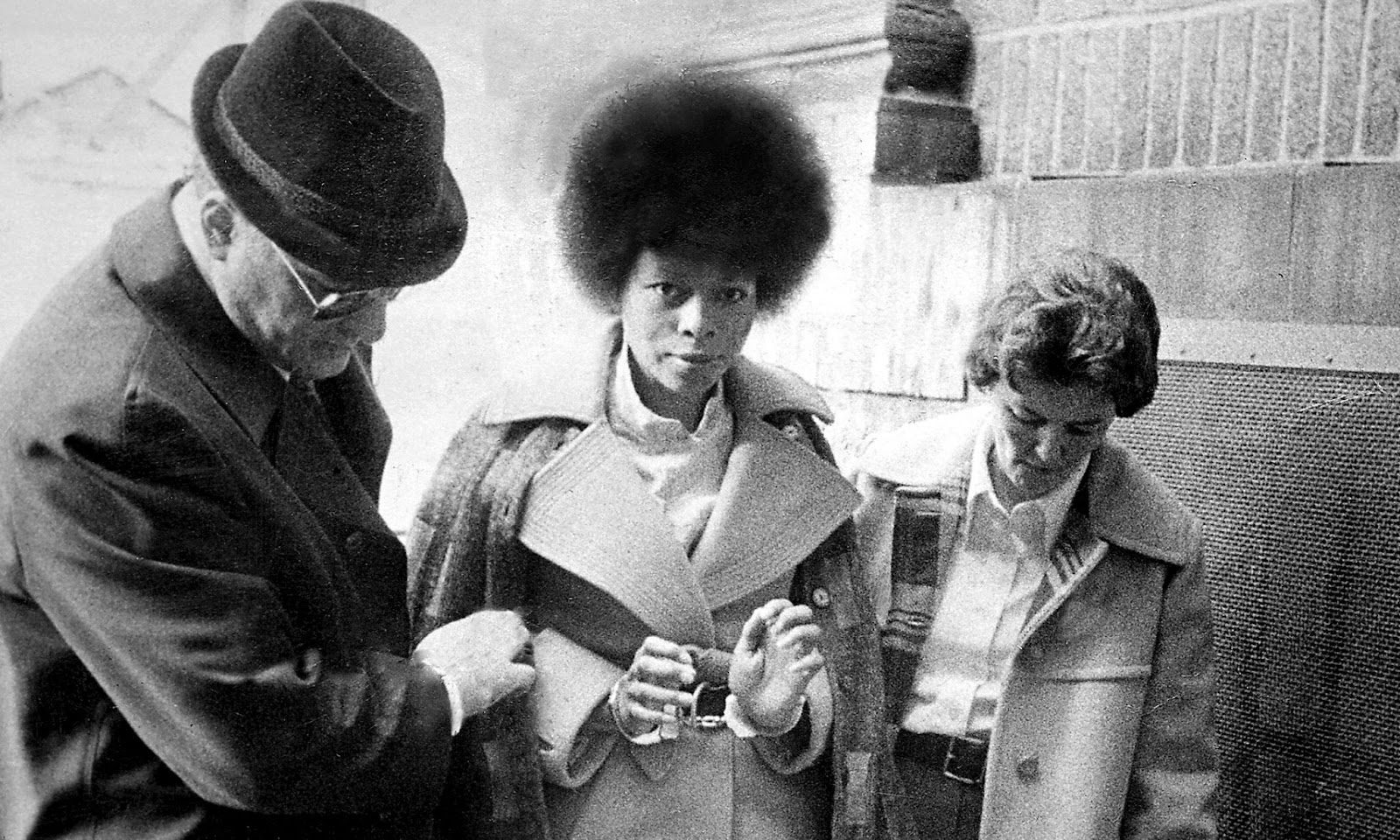
In 1977, Shakur was sentenced to life for the murder of a police officer in 1973 when she and two accomplices were stopped on a New Jersey highway for a vehicle violation. One officer was wounded, and another was fatally shot at the scene. Shakur was held in solitary confinement for 21 months on Rikers Island before the civil rights activist escaped. Rumors say that Black Liberation Party members raised $105,000 to help her break free. Using weapons and dynamite, they took hostages and commandeered a van. Although no one was injured during the escape, two of the four people who assisted Shakur were later captured and imprisoned.